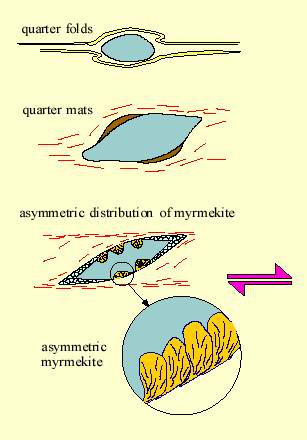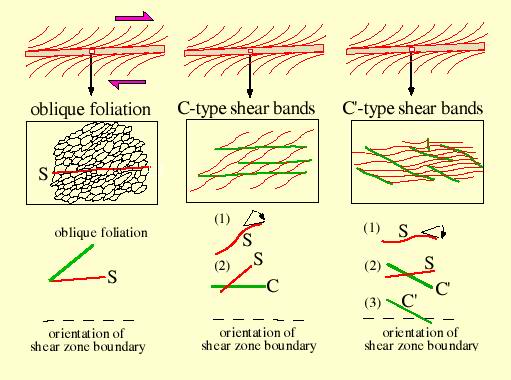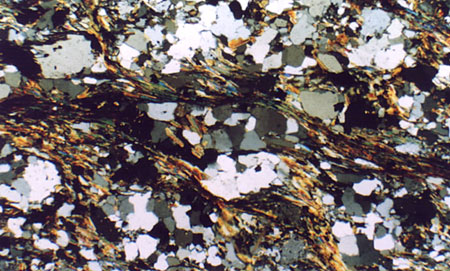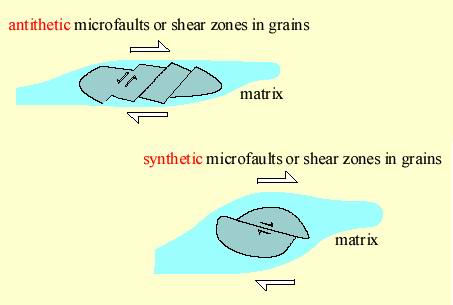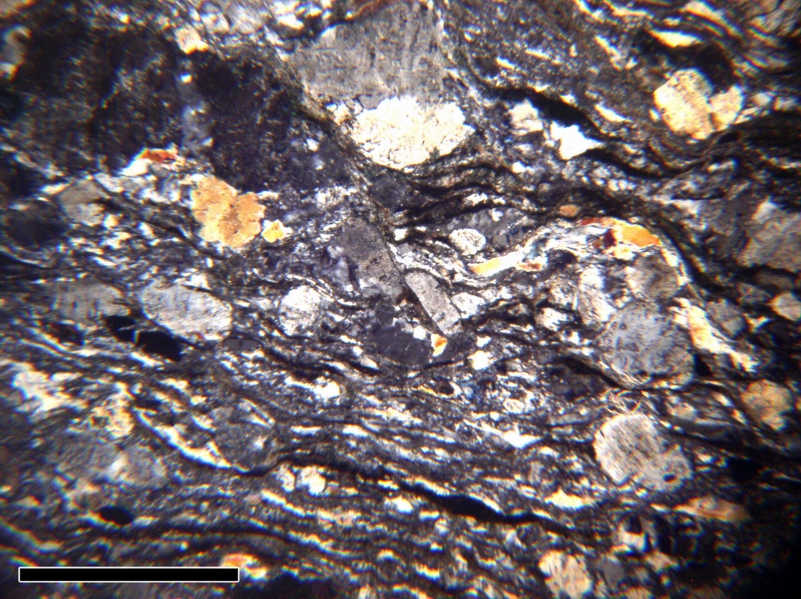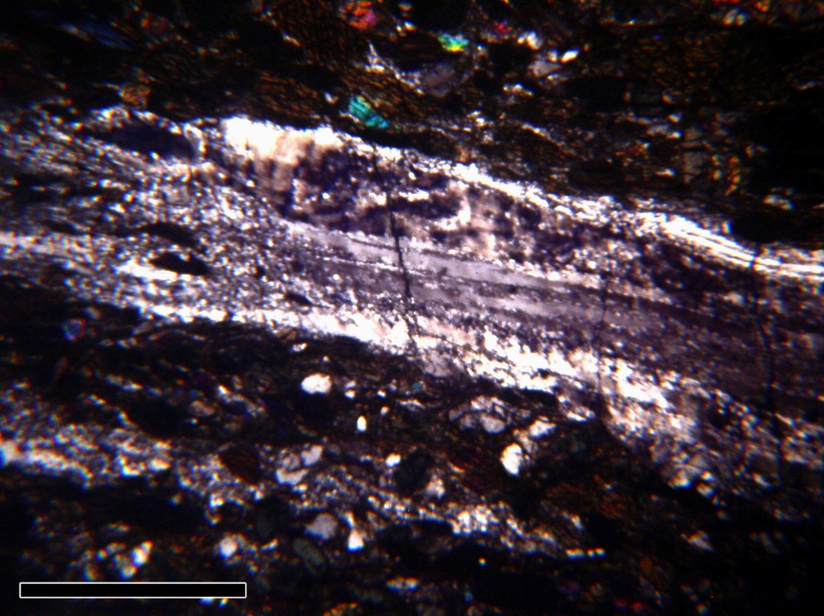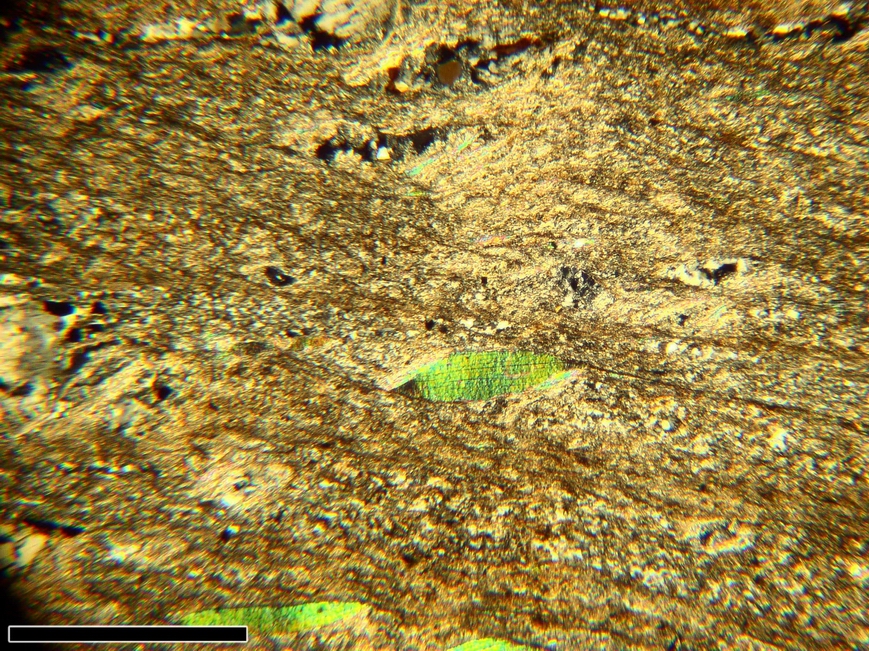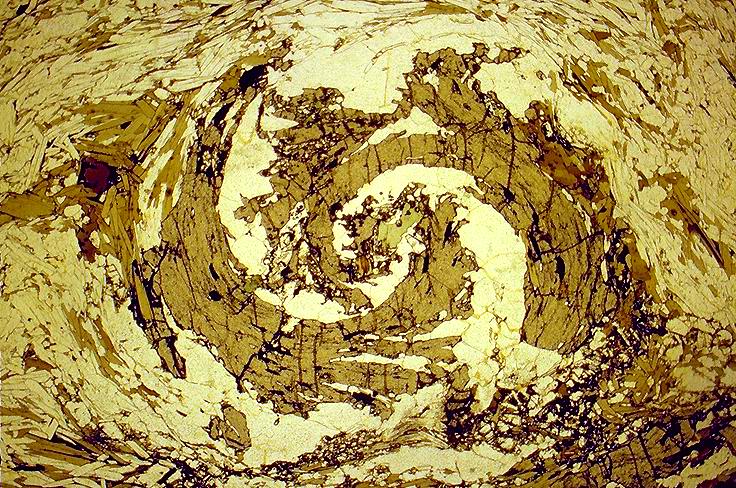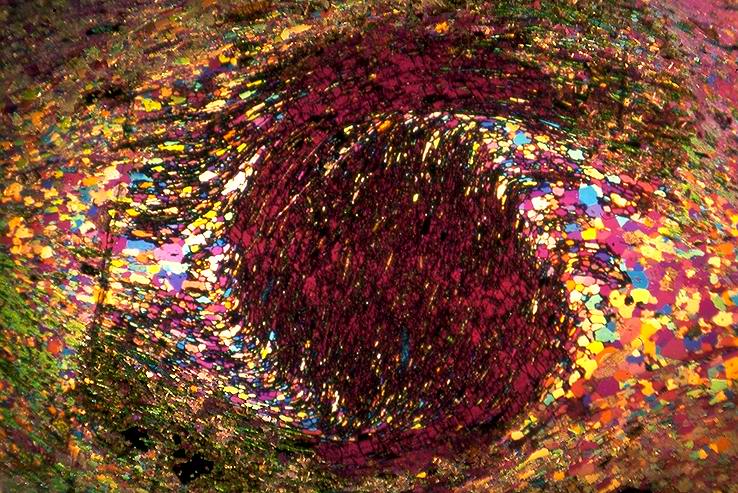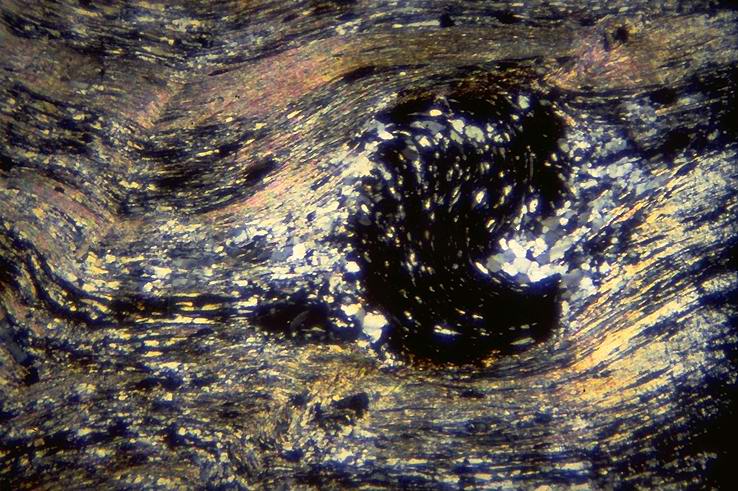
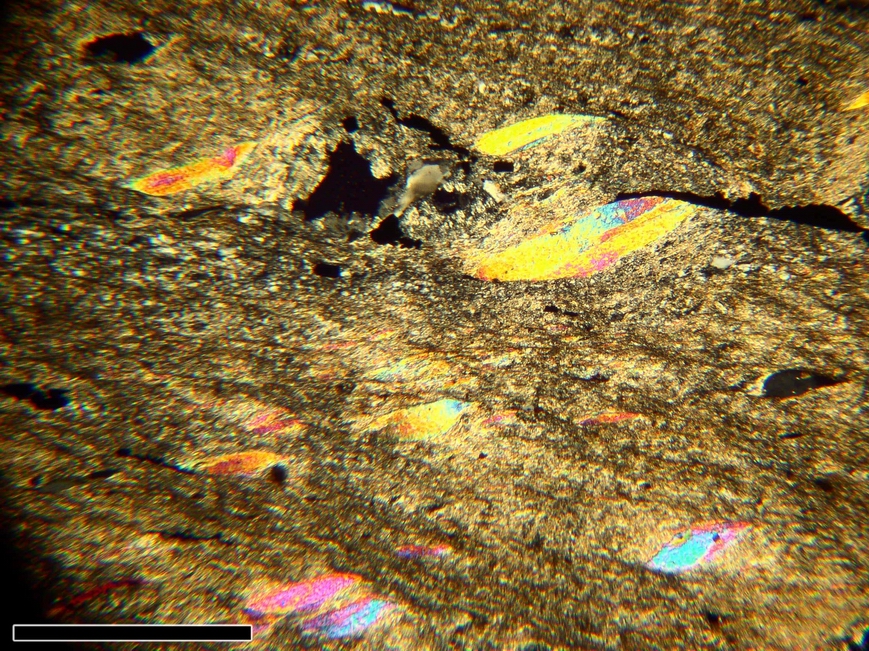
They are most common in
micaceous quartzite mylonite and ultramylonite. Mica fish lie with their
long axis in the extensional quadrant of the deformation and show a
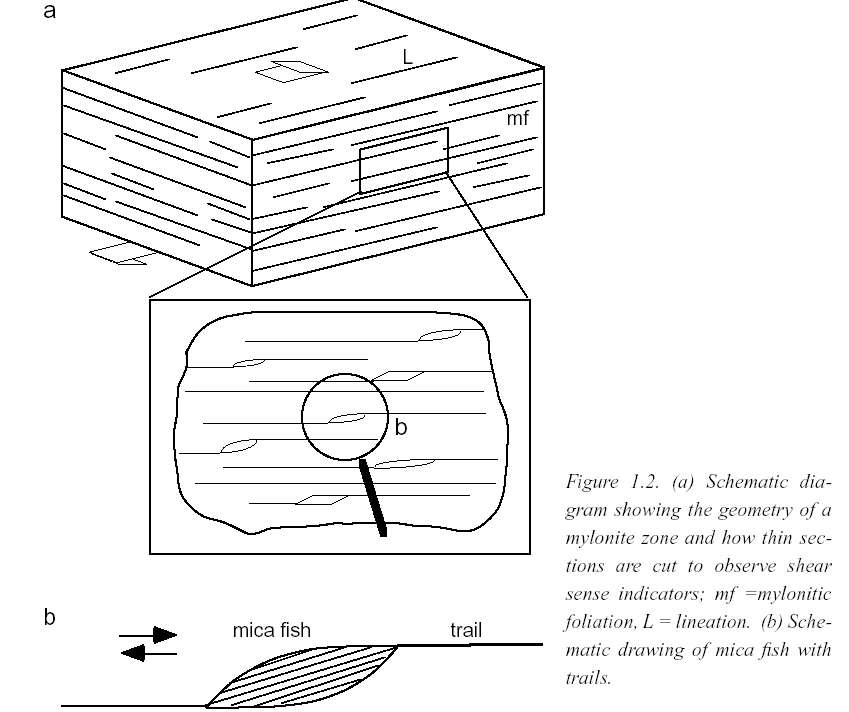
steeper inclination to the fabric attractor than mylonitic foliation . Many mica fish have a monoclinic shape
symmetry with one curved and one planar side that can be used as a
shear sense indicator . Commonly, trails of
small mica fragments extend into the matrix from the tips of isolated
mica-fish ( Lister and Snoke 1984). Basal planes of the micas are usually in the
direction of the long axis of the fish, but
may be parallel to the planar sides. Their development probably results
from combined slip on the basal plane, rigid body rotation, boudinage
and recrystallisation at the edges |